
Hormones are your body’s chemical messengers, they control everything from mood and energy to metabolism and sleep. When they’re in balance, you feel focused, strong, and emotionally stable. But when they’re not, even small changes can trigger a cascade of frustrating symptoms.
You might be surprised to learn that hormonal imbalances are incredibly common and they can affect anyone at any age. Whether you’re feeling unusually tired, moody, or struggling with weight changes, your hormones might be sending you a signal. In this post I am reviewing what hormonal imbalance symptoms to be on the lookout for and what you can do to help your body find balance again.
I am sharing these watchouts with you because I am a wellness coach who has personally struggled with hormonal imbalances myself. By changing what I ate through an anti-inflammatory diet and using yoga and meditation for exercise and mindfulness, I was able to naturally balance my hormones.
Please note, there are affiliate links in this post. Read my privacy policy at the bottom of this page to learn more.
What Is a Hormonal Imbalance?
A hormonal imbalance occurs when your body produces too much or too little of certain hormones. These hormones, such as estrogen, progesterone, testosterone, thyroid hormones, insulin, and cortisol, regulate nearly every system in your body.
Even a small imbalance can affect your mood, metabolism, reproductive health, and overall wellbeing. Because hormones are interconnected, one imbalance often leads to another, making symptoms tricky to pinpoint.
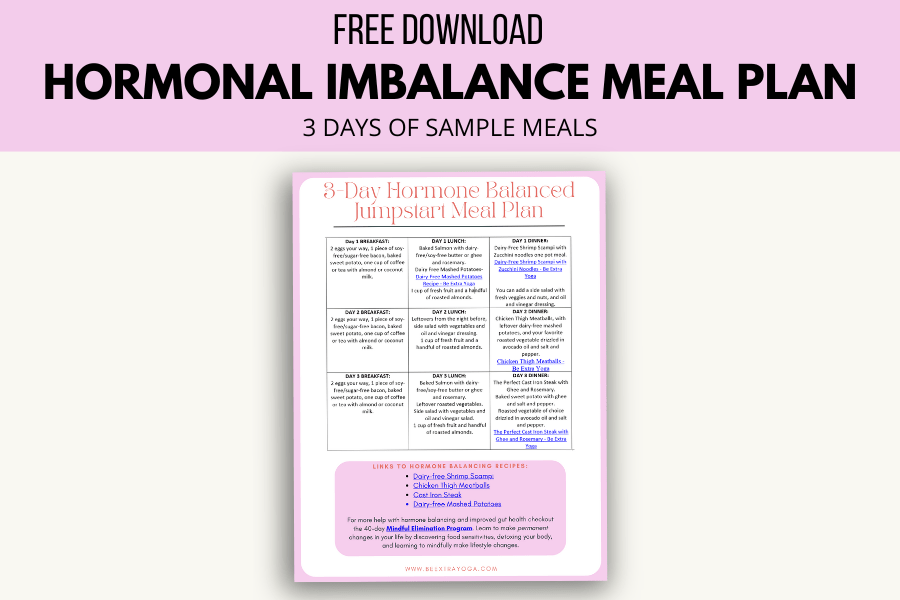
Before we move on, you might be interested in this FREE 3-day hormonal imbalance diet plan. You can get it now by clicking the button below!
Common Hormonal Imbalance Symptoms
The first step to getting your hormones balanced is identifying if that is the problem in the first place. Below, I’ve listed some of the most common hormonal imbalance symptoms that may indicate your hormones need attention. Recognizing these signs early can help you take control of your well-being and restore balance. Let’s get started with the list.
1 – Irregular Periods or PMS Changes
Irregular periods and intensified PMS often signal that estrogen and progesterone levels are out of balance. These hormones regulate the menstrual cycle, so when they fluctuate too much or too little, cycles can become longer, shorter, or more painful.
Mood swings, cramps, bloating, and changes in flow are common signs your hormones may need attention. Recognizing these shifts early can help you take steps toward restoring balance.
2 – Fatigue and Low Energy
Fatigue and low energy can occur when hormones like thyroid, cortisol, or insulin are out of balance. These hormones regulate metabolism, stress response, and energy production.
When they’re disrupted, your body may struggle to convert food into fuel efficiently, leaving you drained even after rest. Persistent tiredness that doesn’t improve with sleep or diet changes is often a key sign of hormonal imbalance.
3 – Digestive Issues
Hormones like cortisol, estrogen, and thyroid directly affect gut function. High stress hormones can slow digestion, while estrogen and thyroid changes may cause bloating, constipation, or nausea. Since the gut and hormones communicate closely, imbalances can disrupt this connection, leading to discomfort or irregularity.
Related: Check out this anti-inflammatory and hormone balancing diet for more details on how to address digestive problems related to hormonal imbalances.
4 – Weight Gain / Bloating
Weight gain and bloating often signal hormonal imbalance because hormones like cortisol, insulin, estrogen, and thyroid regulate metabolism and fluid balance. When these hormones are disrupted, your body may retain water, store more fat, or burn calories more slowly. High stress or fluctuating estrogen can also cause bloating and cravings.
5 – Mood Swings / Anxiety
Hormones like estrogen, progesterone, and cortisol influence brain chemistry and stress response. When these hormones fluctuate too much or too little, they can affect serotonin and dopamine levels, leading to irritability, sadness, or anxiety. This is especially common during menstrual cycles, menopause, or chronic stress.
6 – Hair Loss and Acne
Hormones directly influence oil production, hair growth, and skin cell turnover. Excess androgens, such as testosterone, can overstimulate oil glands, clog pores, and weaken hair follicles, leading to acne and thinning hair. Similarly, fluctuations in estrogen, progesterone, or thyroid hormones can disrupt normal skin and hair cycles, making these visible symptoms key indicators of underlying hormonal issues that may need medical attention.
7 – Trouble Sleeping
Trouble sleeping can be a sign of hormonal imbalance because hormones like melatonin, cortisol, estrogen, and progesterone regulate your sleep-wake cycle. When these hormones fluctuate they can disrupt your body’s natural rhythm.
High cortisol levels may cause restlessness, while low melatonin reduces sleep quality. Similarly, imbalanced estrogen or progesterone can lead to night sweats and insomnia, signaling that your hormones may need rebalancing for better sleep.
8 – Low Libido
Low libido often signals hormonal imbalance because hormones like estrogen, progesterone, and testosterone directly influence sexual desire and arousal. When these levels drop or fluctuate, it can reduce energy, mood, and sensitivity, which are key factors in a healthy sex drive. Stress-related cortisol spikes or thyroid imbalances can also interfere with reproductive hormones, lowering libido.
How to Naturally Restore your Hormone Balance
If you find yourself nodding your head to quite a few of the hormonal imbalance symptoms above, there’s a good chance your hormones are not well-balanced. While it is definitely a good idea to seek medical guidance, in the meantime small changes to daily habits can make a big difference. Here are some natural ways to support your hormone health.
- Eat a balanced diet: Focus on whole foods, lean proteins, healthy fats, and fiber-rich vegetables. Nutrients like magnesium, zinc, and B vitamins are crucial for hormone production. You can learn more by reading up on how to eat a hormone balancing diet.
- Manage stress: Try mindfulness, yoga, or deep breathing to lower cortisol levels. Get access to my online Yoga Classes for Reducing Stress to help!
- Get enough sleep: Aim for 7–9 hours of quality rest each night to allow your body to reset hormone production.
- Exercise regularly: Gentle movement like walking, strength training, or cycling can help regulate insulin and boost endorphins.
- Limit toxins: Choose natural skincare and cleaning products.
Recognizing hormonal imbalance symptoms early is the first step toward feeling better.
Hormonal imbalances can affect how you feel, think, and function every day. By making supportive lifestyle changes, reducing stress, and seeking medical guidance when needed, you can help your body regain harmony and thrive again. Finally, I can help too as a Cornell University-certified virtual wellness counselor. You can book a FREE discovery call now, to learn more and speak directly with me.